

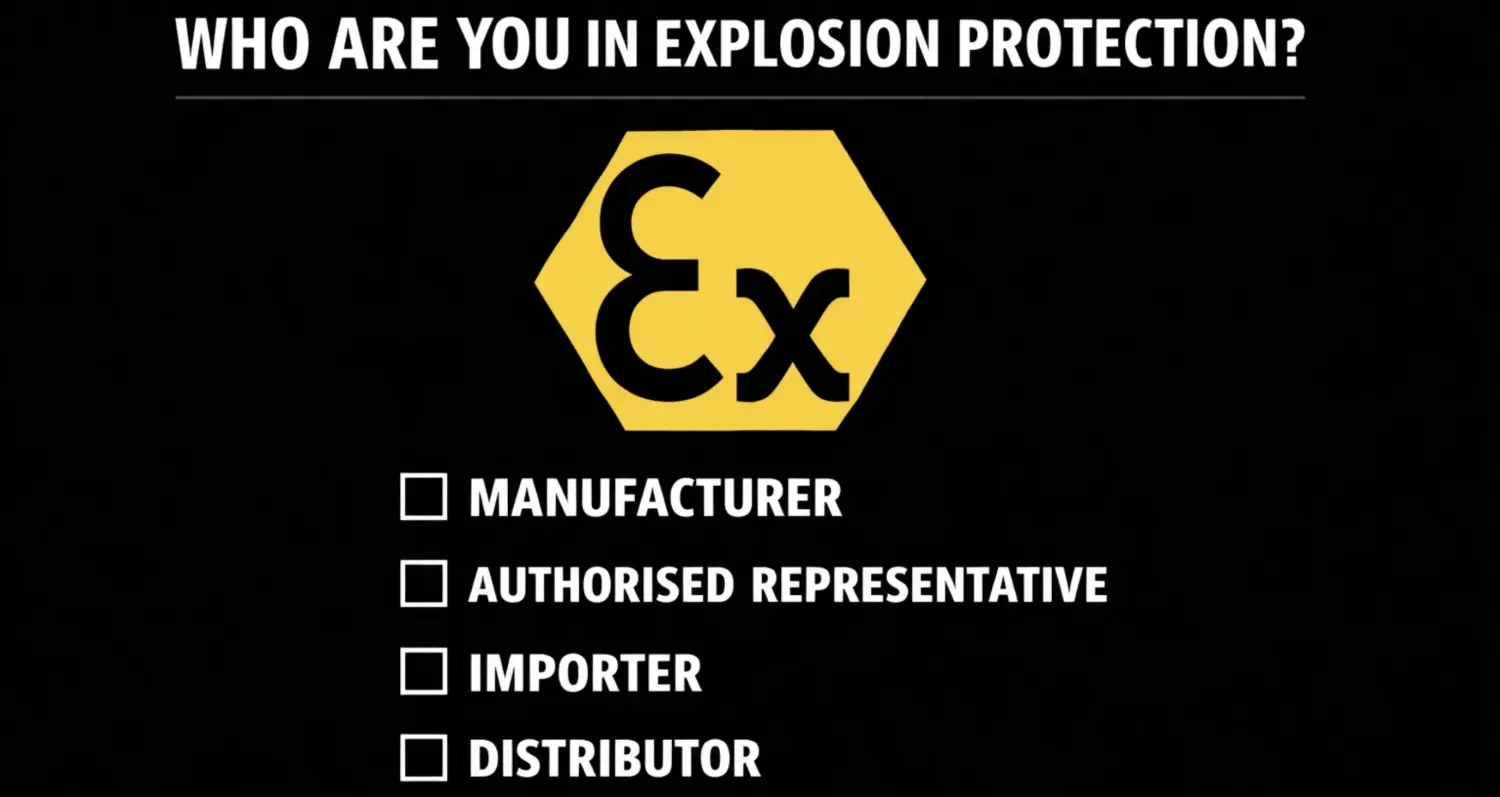
The ATEX Directive 2014/34/EU, in its Chapter 2, gives us an unexpected mirror for self-knowledge. It defines four economic operator roles:
On paper, these look clean and well separated. In real life, they overlap, interface, and does the opposite.
Why Self-Knowledge Matters in Explosion Protection? The ATEX Roles
Manufacturer – Do You deliver the solution?
ATEX defines a manufacturer as the one who designs or manufactures equipment and places it on the market under their name.
Self-knowledge test:
If yes, you do deliver the solution — even if you never touch the factory floor. Many "non-manufacturers" behave like manufacturers without realising it.
Authorised Representative – Do You know whom and what you represent?
An authorised representative acts on behalf of a manufacturer.
Self-knowledge test:
If yes, you are not just a messenger. You are a translator of safety in general. Misinterpretation here does not cause paperwork errors, it causes field-level ignition scenarios.
Importer – Do You give access to information, are you transparent?
Importers ensure that equipment entering a market complies with ATEX.
Self-knowledge test:
Importers often sit at the weakest safety bridge: between different regulatory cultures, assumptions, and enforcement levels. Explosion protection often collapses at borders.
Distributor – Do You only sell the product or support its selection as well?
Distributors place equipment on the market without modifying it.
Self-knowledge test:
Selection is a design act—even if ATEX does not call it that. Choosing the wrong compliant product is still choosing an ignition source.
The Uncomfortable Truth
Most professionals in hazardous industries are more than one role at the same time.
ATEX roles are legal categories. Explosion protection failures often happen in human grey zones.
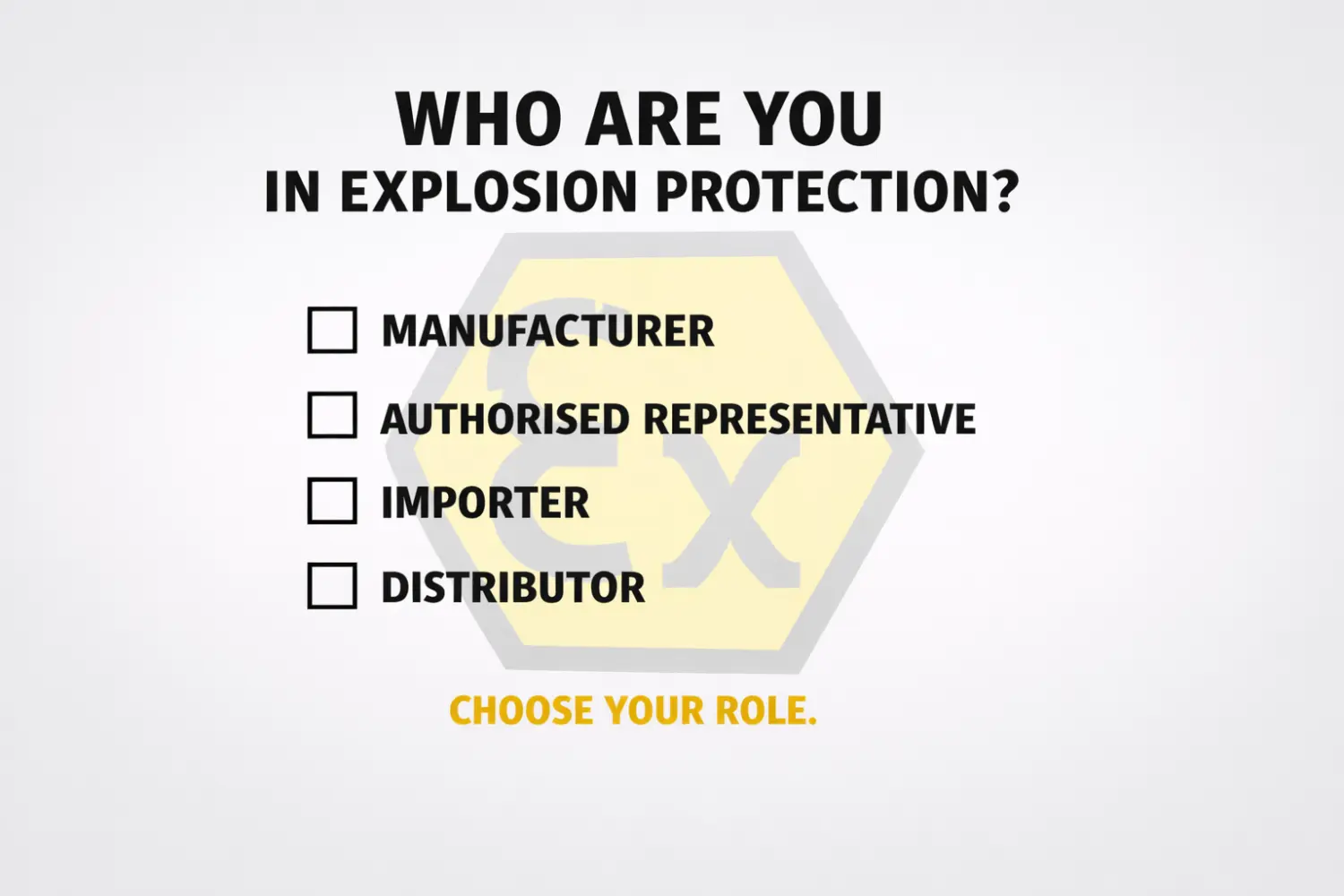
A Short Self-Knowledge Test
Ask yourself honestly:
Your answers define your real role — not your contract.
Why This Matters More Than Ever?
Modern hazardous installations are:
In such systems, self-knowledge becomes a safety barrier. Explosion protection is not only about:
It is about knowing when and how you are part of the Ex protection concept — whether you admit it or not.
Final Thought
ATEX Directive tells us what roles exist. Explosion protection demands that we ask: Which one am I — right now?
And perhaps more importantly: Am I acting like one without taking responsibility for it? That question alone has prevented more explosions than many checklists ever will.
Keep up the good work!
Note: Your comment will only appear on the site after review. Your email address will not be visible, only your name and comment.