

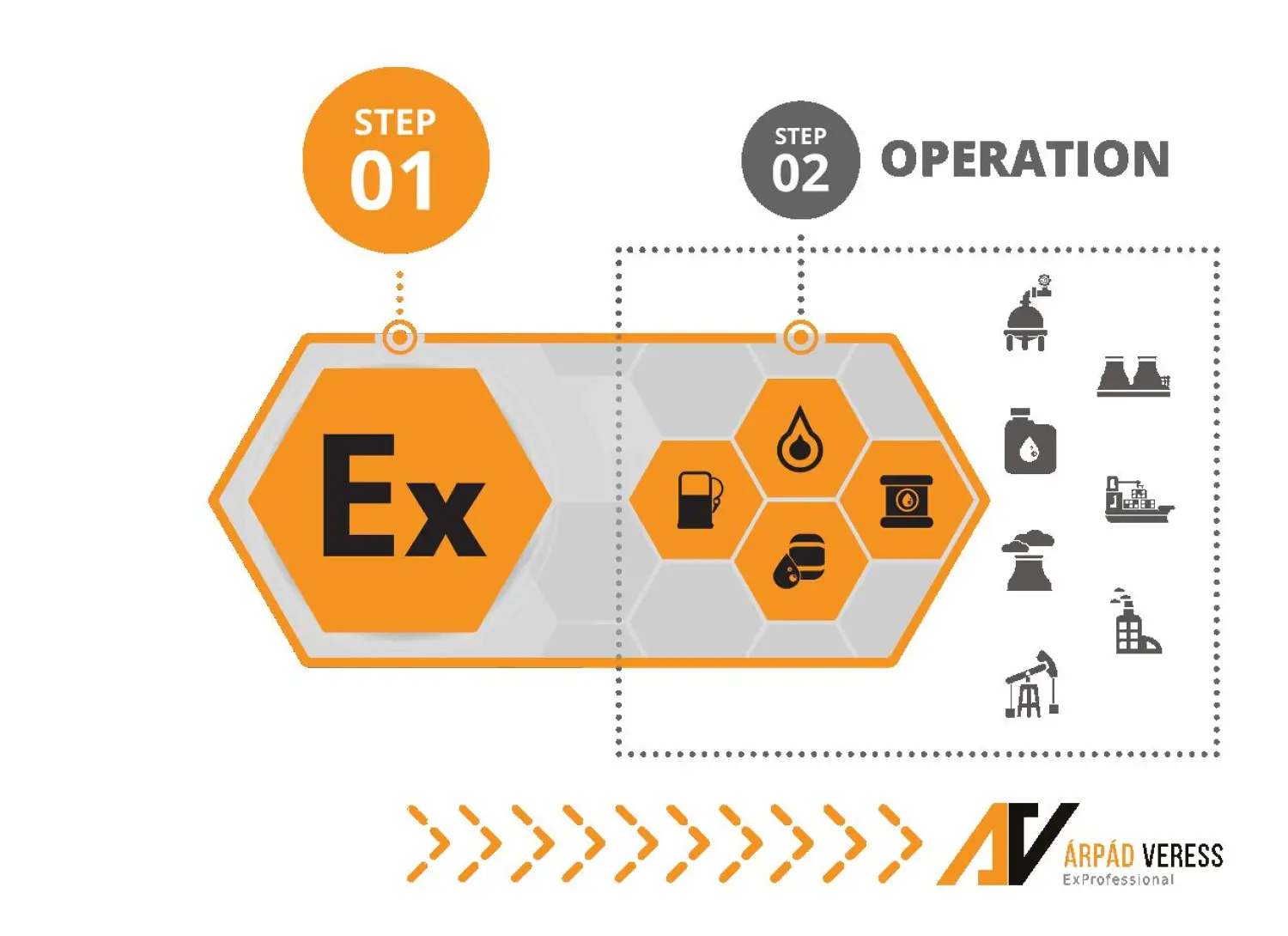
The logical sequence of Explosion protection
Step 01 — Explosion Protection (Ex compliance) ⬇ Step 02 — Industrial Operation
The core philosophy of explosion safety engineering: safe operation in hazardous industries is only possible if Ex compliance is established first.
Explosion Protection as the Foundation of Safe Operation in Hazardous Area Industries
Industrial sectors that handle flammable gases, vapours, mists, or combustible dusts operate under a constant risk of explosion. Industries such as oil and gas production, petrochemical processing, chemical manufacturing, hydrogen handling, grain processing, mining, and fuel distribution routinely create conditions where explosive atmospheres may occur. In these environments, the safe operation of equipment and facilities depends fundamentally on Explosion Protection (Ex) compliance engineering.
Explosion protection is therefore not simply a regulatory requirement or a documentation exercise. It is a pre-condition for safe industrial operation. Without it, the operational phase of hazardous industries cannot be considered controlled or safe.
The Nature of Hazardous Area Operations
A hazardous area is defined as a location where an explosive atmosphere may be present in quantities that require special precautions for the construction, installation, and use of equipment. An explosive atmosphere forms when three elements of the explosion triangle are present:
Industrial processes often cannot eliminate the first two elements. Hydrocarbons, solvents, hydrogen, and dusts are inherent to production processes. Oxygen is present in ambient air. Consequently, the primary engineering focus shifts toward controlling ignition sources and limiting the probability of explosive atmospheres.
Explosion Protection Engineering as Step One
Explosion protection engineering establishes the technical and organizational framework that allows industrial processes to operate safely in the presence of flammable substances. Before an industrial facility can operate, several key steps must be completed.
Hazardous Area Classification
The first step is the identification and classification of hazardous zones. Based on standards such as IEC 60079-10-1 (gas) and IEC 60079-10-2 (dust), areas are classified according to the probability and duration of explosive atmospheres. Typical classifications include:
|
Zone |
Description |
|
Zone 0 |
Explosive atmosphere present continuously or for long periods |
|
Zone 1 |
Likely to occur in normal operation |
|
Zone 2 |
Unlikely but possible under abnormal conditions |
The result of HAC is the EPL, which defines the minimum safety requirements of the installation, operation, and many more.
Selection of Explosion-Protected Equipment
Once zones are defined, equipment must be selected according to the appropriate explosion protection concept. Examples include:
Engineering Design and Installation
Explosion protection also affects:
The installation must follow standards such as IEC 60079-14, which governs electrical (non electrical) installations in explosive atmospheres.
Verification, Inspection, and Documentation
Before operation begins, the system must be verified through:
Standards such as IEC 60079-14/-17 define inspection requirements to ensure the installation remains compliant during operation. This documentation provides traceability and ensures that every component within the hazardous area has been properly assessed. See EPD (explosion protection documentation), VD (verification dossier) – immediate content for the lifetime tracking of hazardous area industries.
Transition from Compliance to Operation
Only after explosion protection engineering is completed can industrial operation begin. In other words: Ex compliance enables safe operation. During the operational phase, industries such as:
handle large volumes of flammable materials (Ex).
The safe functioning of pumps, compressors, valves, tanks, reactors, and electrical systems relies on the correct implementation of explosion protection principles during the design phase.
Operation in Hazardous Industries
Once operational, hazardous facilities must maintain explosion protection through:
Any modification to equipment or process conditions can affect the hazardous area classification or introduce new ignition risks.
Consequences of Missing Ex Compliance
History has demonstrated the consequences of ignoring explosion protection engineering. Industrial explosions have occurred due to:
Such incidents can lead to catastrophic explosions, loss of life, environmental damage, and economic loss.
Explosion Protection as a System-Level Discipline
Explosion protection is therefore best understood as a system-level engineering framework integrating:
It links regulatory compliance (such as ATEX directives or IECEx systems) with practical industrial engineering. Rather than limiting operations, Ex compliance enables industries to safely handle energy-dense and flammable materials that are essential to modern economies.
Note: here access to information (documentation) is essential.
Keep up the good work!
Note: Your comment will only appear on the site after review. Your email address will not be visible, only your name and comment.