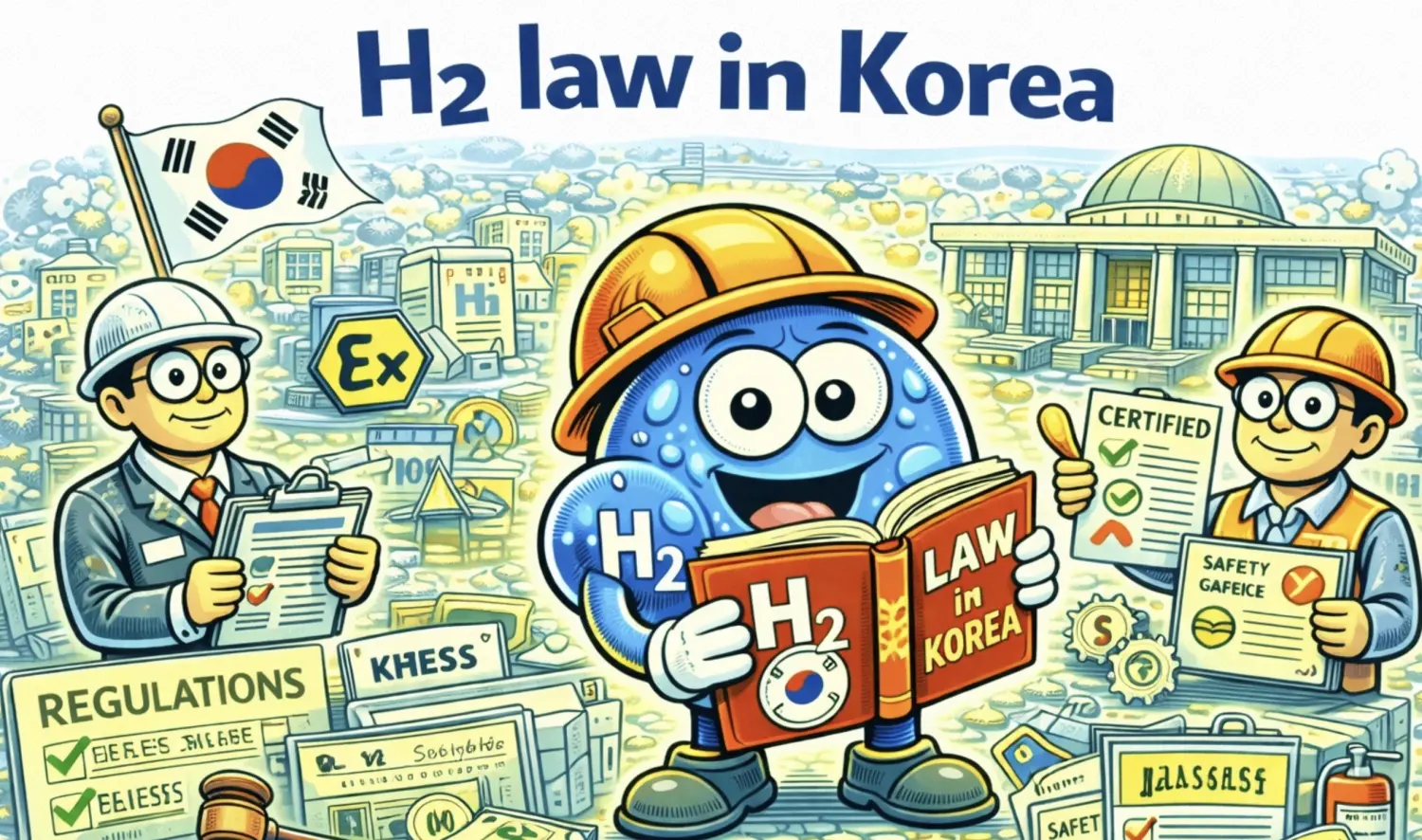
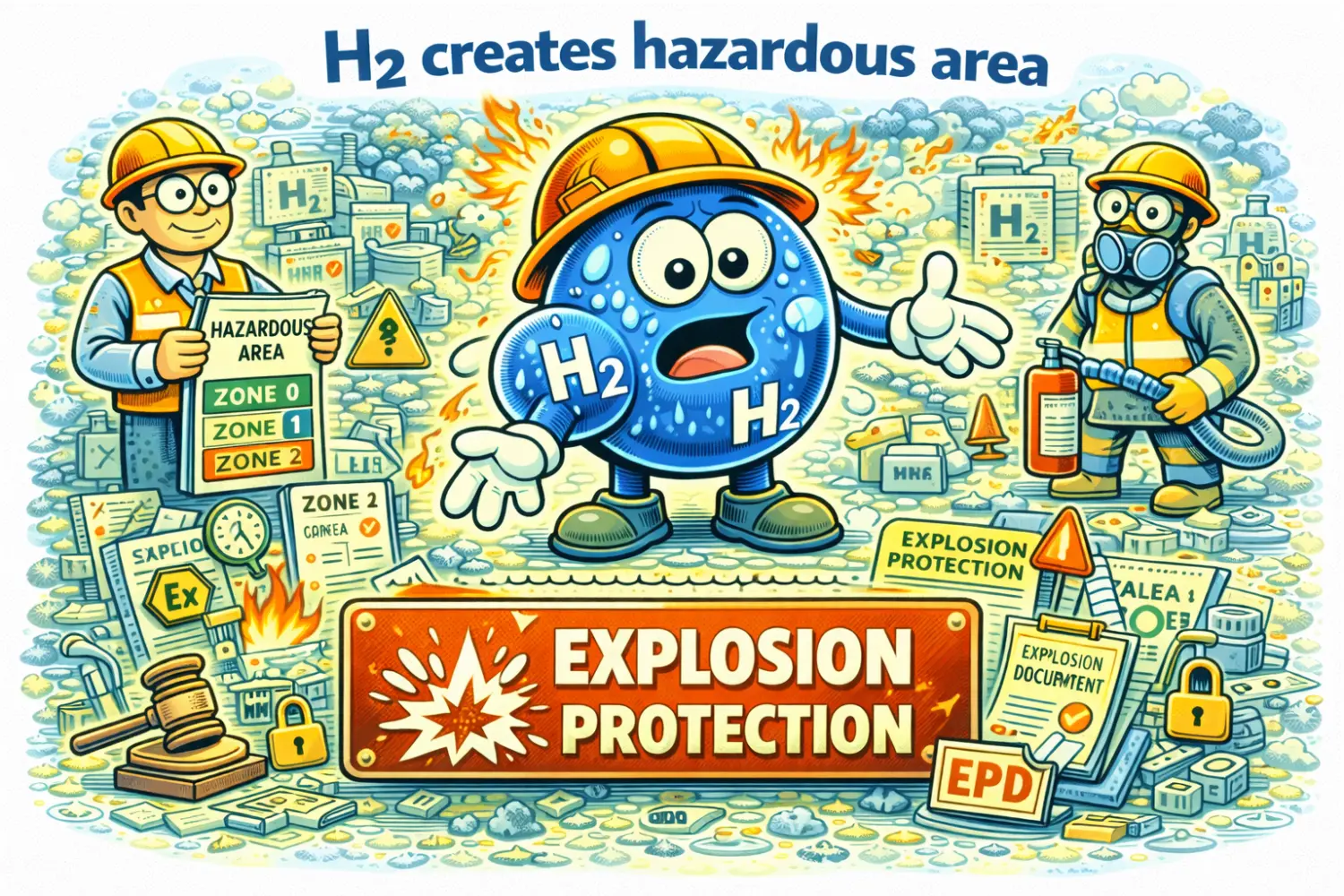
The Hydrogen Economy Promotion and Hydrogen Safety Management Act (Act No. 16942) serves as the primary regulatory framework in South Korea for ensuring public safety and the systematic management of hydrogen as the nation transitions to a hydrogen-based economy.
While the Act is a high-level framework, it establishes a rigorous system of safety management, technical standards, and institutional oversight specifically designed to prevent accidents and ensure the integrity of hydrogen equipment.
The regulation addresses safety and explosion prevention through the following mechanisms:
1. Integration with Existing Safety Statutes
The Act is designed to complement existing Korean safety laws. It explicitly states that it does not apply to matters already prescribed by the High-Pressure Gas Safety Control Act, the Urban Gas Business Act, and the Safety Control and Business of Liquefied Petroleum Gas Act regarding general hydrogen business safety. However, it takes precedence regarding the manufacture and inspection of fuel cells. This ensures that high-pressure hydrogen systems are regulated under the most stringent existing industrial safety standards while filling gaps for new technologies like fuel cells.
2. Strict Manufacturing and Technical Standards
To prevent failures that could lead to explosions, the Act imposes a "permission-based" system for manufacturers:
• Permission and Review: Any person intending to manufacture hydrogen equipment must obtain permission for each place of business. This permission can be denied if the business is deemed to "cause obstacles in protecting the people's lives" or if a technical review by the Korea Gas Safety Corporation determines that safety has not been ensured.
• Detailed Standards: The Gas Technical Standards Committee is authorized to establish "detailed standards" that define specific dimensions, specifications, and test methods for hydrogen equipment and fuel-using facilities. Manufacturers must comply with these technical standards to operate legally.
• Foreign Registration: To ensure the safety of imported equipment, foreign manufacturers must also register with the Minister of Trade, Industry and Energy and meet the same technical capabilities and safety standards as domestic producers.
3. Operational Safety and "Safety Control Regulations"
The Act mandates that safety is not just a feature of the equipment, but a continuous operational requirement:
• Safety Control Regulations: Manufacturers must establish and submit formal "safety control regulations" that detail the manufacturing processes and self-inspection methods. These regulations require an official opinion from the Korea Gas Safety Corporation before the business can start.
• Mandatory Safety Personnel: Every hydrogen equipment manufacturer is required to appoint safety personnel whose sole duty is to ensure the safety of equipment and prevent harm. These individuals must have specific qualifications and their appointment must be reported to the authorities.
• Prohibited Alterations: The Act strictly prohibits any person from altering the structure or performance of hydrogen equipment, as unauthorized modifications can compromise explosion protection.
4. Inspection and Verification Regimes
The regulation establishes multiple "checkpoints" to verify safety throughout the lifecycle of a facility or product:
• Completion Inspections: Before any manufacturing facility or hydrogen fuel-using facility can begin operation, it must pass a "completion inspection" to ensure it was built according to the approved safety plans.
• Periodic Inspections: Facility users are subject to regular periodic inspections to ensure that safety systems have not degraded over time.
• Equipment Inspections: All hydrogen equipment, whether manufactured in Korea or imported, must undergo and pass an inspection before it can be sold or used. Inspected items are stamped or marked to verify compliance.
5. Institutional Support for Safety Research
To address the evolving risks of hydrogen technologies, the Act allows for the designation of an "Institution Exclusively for Hydrogen Safety". This body is tasked with:
• Research and Development: Investigating standards and developing technologies for the safety of hydrogen equipment and fuel-using facilities.
• Accident Prevention: Providing technical support and developing technologies specifically aimed at preventing accidents.
• Safety Education: Conducting mandatory education for everyone engaged in the safety management of hydrogen businesses.
6. Legal Enforcement and Liability
The regulation carries heavy penalties for safety violations to ensure compliance:
• Criminal Penalties: Altering hydrogen equipment for sale or selling equipment in a way that compromises safety can result in up to five years of imprisonment or a fine of up to 50 million won.
• Administrative Fines: Failing to submit safety control regulations or using facilities without passing inspection can lead to fines of up to 10 million won.
• Mandatory Insurance: Manufacturers and importers must subscribe to insurance to compensate for any damage to life, body, or property caused by accidents.
It makes sense to learn from others.
Keep up the good work!